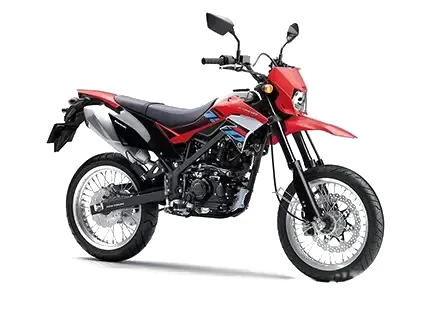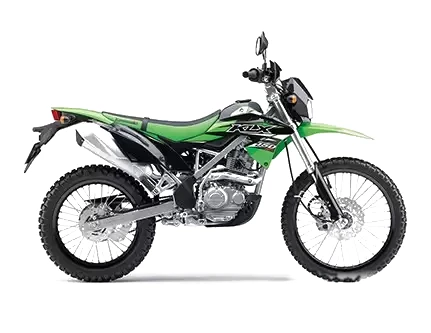
Kawasaki KLX 150BF Ownership Assessment: Rough-Road Purpose, Everyday Compromises
The Kawasaki KLX 150BF is a specialist choice for Bangladesh riders who value rough-road clearance more than commuter convenience. This Bike Price Bangladesh assessment is specification-based editorial analysis, not a hands-on test or owner testimonial. The supplied listing describes a 2026, 144cc off-road motorcycle available through Asian Motorbikes Limited at Tk 395,000. Prices and specifications are indicative and have not been independently verified; confirm the final showroom quotation, exact specification and registration suitability before paying.
1. Who Should Consider the Kawasaki KLX 150BF?
The strongest case is for a mostly solo rider whose routes include broken rural roads, uneven access tracks or recreational dirt riding. Its listed 118 kg weight and 295 mm ground clearance are relevant advantages when manoeuvring around obstacles. They do not prove easy handling for every rider: seat height is missing, so test whether you can stop, reverse and recover your balance confidently.
At Tk 395,000, this is a purpose-led purchase rather than an obvious value commuter. Riders prioritising passenger comfort, luggage or long paved journeys should compare road-focused categories, verifying local availability rather than assuming any alternative is in stock.
2. Kawasaki KLX 150BF Power: Use the Gears, Not Speed Claims
The air-cooled, single-cylinder four-stroke produces a listed 12 bhp at 8,000 rpm and 11.03 Nm at 6,400 rpm. Torque peaks below maximum power, but both figures arrive well above idle. Expect to select an appropriate gear for climbs and overtakes rather than assume strong acceleration from low revs; the supplied figures do not reveal the complete torque curve.
The five-speed manual gives the rider control over that modest output. Extra load and gradients will increase the importance of gear selection. The approximate 120 km/h top-speed listing is neither a tested result nor a safe cruising recommendation, and should carry little weight in this bike's buying decision.
3. Kawasaki KLX 150BF Fuel Planning in Bangladesh Traffic
The listed economy is approximately 40 km/l, not measured urban consumption. A carburettor, repeated acceleration, idling and low-gear progress make budgeting solely around that figure unwise. No verified Dhaka traffic figure is supplied, so establish your own consumption through repeated full-to-full records after purchase.
Multiplying the 6.9-litre tank by the stated estimate gives about 276 km theoretically. That is not a dependable refill interval: usable fuel, reserve arrangements and actual conditions are unspecified. Plan earlier stops on unfamiliar rural routes. Fuel spending can then be calculated from your recorded kilometres per litre and the current pump price.
4. Rough Roads, Rider Fit and Pillion Reality
The Kawasaki KLX 150BF combines 35 mm Showa USD forks with a Uni-Trak single gas shock offering five-way spring preload adjustment. Together with the clearance and 21-inch front wheel, these specifications suggest a rough-road emphasis. Suspension travel, damping settings and load limits are not supplied, however, so they cannot establish how comfortably it absorbs potholes.
Rear preload adjustment helps accommodate load changes but does not increase the permitted carrying capacity. The listing says single-seat; do not assume suitable pillion accommodation. Check the actual seat, passenger footrests and approved capacity. With overall dimensions of 2080 × 770 × 1145 mm and a 1,340 mm wheelbase, a parking-space and riding-position check is worthwhile.
5. Kawasaki KLX 150BF Brakes and Tyres Need Attention
Front and rear disc brakes are listed, with ABS explicitly absent. That removes an anti-lock safeguard when braking on wet surfaces, loose grit or sudden obstacles. Disc hardware alone does not establish stopping distance or lever feel; check brake operation and build progressive braking skills in a controlled setting.
Tyres are listed as 70/100-21 front and 90/100-18 rear, both tubeless, alongside spoke wheels. Verify the actual tyre markings and rim sealing arrangement rather than assuming every spoke-wheel assembly supports tubeless use. Tread pattern, compound and age remain unknown, so neither wet-road grip nor dirt traction can be judged from size alone.
6. Inspect the Kawasaki KLX 150BF, Without Assuming Faults
Documented model-specific fault evidence is not supplied. Inspection should therefore address condition, not alleged recurring defects. Examine frame joints, paint coverage, fasteners, fork seals, shock condition, wheel alignment and spoke tension. On a used example, inspect the underside, controls and steering stops for impact evidence, particularly if the seller mentions off-road use.
Check both electric and kick starting, the analog speedometer and the 35W/35W halogen headlight. The headlight rating alone cannot establish night visibility; assess beam condition and aim. Listen during a cold start and verify charging-system operation. These are buying checks, not claims that this model commonly suffers electrical or engine trouble.
7. Parts and Servicing: Obtain Written Answers First
The supplied description identifies Asian Motorbikes Limited as the Bangladesh sales channel, but that does not establish workshop coverage or current spare-parts stock. Ask a local supplier for written availability and lead times, separating routine consumables—oil, plugs, filters, brake pads and chain components—from model-specific plastics, suspension parts, wheel components and electrical assemblies.
Air cooling avoids coolant servicing, while the carburettor still requires appropriate inspection and adjustment. Budget for scheduled oil changes, chain care, air-filter attention, valve checks and tyre replacement according to the correct manual and riding conditions. No service intervals or parts prices are supplied. Obtain labour quotations and ask which repairs require ordered-in components before committing.
8. Used Kawasaki KLX 150BF: Buy Condition and Paperwork
Verify ownership, registration documents and matching engine and chassis numbers. Request maintenance records and investigate modifications, especially changes affecting wheels, suspension, intake or exhaust. A clean exterior cannot establish mechanical condition; an independent inspection should check bearings, drivetrain wear, clutch operation and gear engagement.
No resale percentages or verified transaction history are supplied. Specialist appeal may narrow the buyer pool compared with general-purpose commuters, but actual resale depends on condition, documentation, asking price and parts confidence. Compare genuine local offers rather than treating the listed new price as a guaranteed depreciation benchmark.
Pros
- Listed 118 kg weight supports easier manual manoeuvring.
- 295 mm ground clearance offers useful obstacle clearance.
- Showa USD forks and preload-adjustable Uni-Trak rear suspension.
- Both electric and kick starting are specified.
Cons
- No ABS safeguard during emergency braking.
- Single-seat listing limits assumptions about pillion practicality.
- Small 6.9-litre tank requires deliberate fuel planning.
- Modest output makes gear selection important under load.
Verdict
The Kawasaki KLX 150BF makes the clearest sense as a solo, rough-road-focused purchase. Its clearance, weight and suspension specification are compelling, but confirm fit, legal use, tyre construction and written parts support. For predominantly paved commuting with a passenger, its compromises deserve more attention than its off-road appeal.